By Tatenda Chitagu
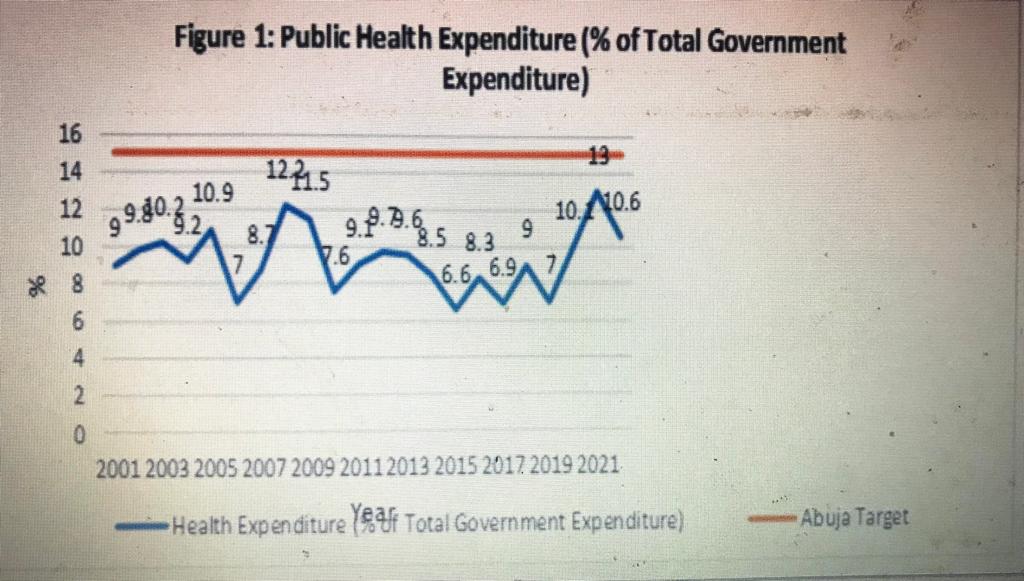
In 2001, the African Union (AU) member states signed the Abuja Declaration, thereby pledging to allocate at least 15% of their national budgets each year to improving their healthcare systems.
According to the World Health Organisation (WHO), countries such as Rwanda, Malawi, Madagascar, Togo and Zambia have managed to reach this target. Ahead of Finance Minister Mthuli Ncube’s announcement of the 2023 budget, ZimTracker fact-checked how Zimbabwe has fared on this commitment from 2016.
In November 2021, Finance minister Mthuli Ncube claimed that he had come close to fulfilling the Abuja pledge after allocating health 14.9% from his ZWL$927,3 billion budget for 2022. Simple calculations proved that his maths was not adding up and that he had overstated the health allocation. The health ministry was allocated ZWL$117.7 billion against a total budget of ZWL$927.3 billion-which represents 12.7%. So far, public expenditure on health stands at 10,6 percent, according to the Community Working Group on Health (CWGH). (Note the difference between what is allocated and the actual disbursements.)
This is a typical so-near-yet-so-far scenario as health facilities continue to deteriorate, with hospitals running without drugs and ambulances. There has been a massive exodus of staff who are seeking better salaries and improved working conditions to the United Kingdom and other countries. According to the Zimbabwe Coalition of Debt and Development (ZIMCODD), the health sector has a huge deficit in terms of infrastructure, equipment and workforce, thus the need to allocate more resources to restore decent services.
According to the CWGH, as at 2019, the main source of health financing are external aid/financing (29,55%), followed by voluntary health insurance contributions (27,27%), then out of pocket spending (24,38%) and lastly government transfers (17,65%).
In the 2023 budget consultations, citizens demanded that the health budget be increased up to 25%-30% allocation, prioritising maternal health service. The CWGH has petitioned parliament to prioritise primary health care to ensure universal health coverage; strengthen the national referral, provincial, district health facility and community centres; improve availability, accessibility, affordability and quality of health services; facilitate inter-sectoral collaboration and partnerships with the private sector; increase health staff; improve health information management and fund health research; intensify prevention and control of non-communicable and communicable diseases, invest in mental health, among other demands.
Government Response:
ZimTracker caught up with the parliamentary chairperson of the budget committee, Dr Mathew Nyashanu, who is also the Buhera Central legislator, at a national health financing pre-dialogue meeting for civil society, parliamentarians and the media organised by the Community Working Group on Health (CWGH) with the support from the Global Fund at a local hotel in Harare on 31 October 2022.
Dr Nyashanu had this to say on the matter; “In the last three years, government has been trying to meet the 15 percent threshold. But it remains an aspiration because of competing needs. We have not been able to allocate 15 percent of the national budget towards health, but we aspire to do that and we are still committed to honour the pledge.”
Late or disbursements that fall below the initial budgetary allocation:
Dr Nyashanu shifted the blame to ministries that either delay with requests or with the paperwork on acquittals of previously allocated money.
“On late disbursements those that are below what has been allocated, sometimes it’s not to do with the Ministry of Finance, but the ministries are to blame for failing to develop capacity. There are certain requirements from treasury that Ministries have to meet in terms of paperwork and acquittals. We have heard such complaints, and upon enquiries, we realise that some Ministries that complain failed to meet the Treasury requirements.
“However, sometimes the problem is with funding. Ministries may have requested so much, but get less than what they expect because of competing needs. But by and large, the Ministries are to blame for failing to do paperwork for disbursements,” said Dr Nyashanu.
Trends in Public Health Expenditure, 2016-2022 (source CWGH)
2016 8,3%
2017 6,9%
2018 9,0%
2019 7,0%
2020 10,1%
2021 13,0%
2022 10,6%



 ZimTracker