By Walter Marwizi
PRICE-TAGGING empty shelves has become the latest survival tactic by Zimbabwean companies battered by rolling power cuts.
The unprecedent move comes as 18 hour electricity blackouts have literally turned day into night for many businesses and households, with most work or household chores being done well into the middle of the night when power is restored, albeit for a few hours.
In Masvingo, Texas butchery, which used to boast of a well functioning cold chain system, has become a pale shadow of its former self. Customers who used to run their eyes on displays brimming with bacon, choice meat cuts and prime sausage are now confronted with empty shelves with old-school price tags stuck on them.
A shop assistant quickly arrives to reassure them every product with a price tag is in stock.
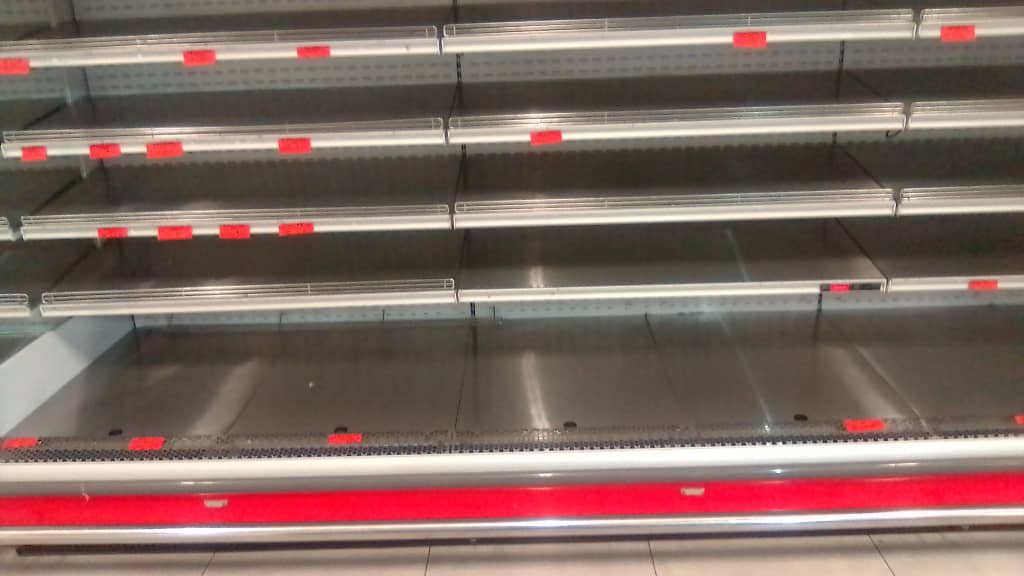
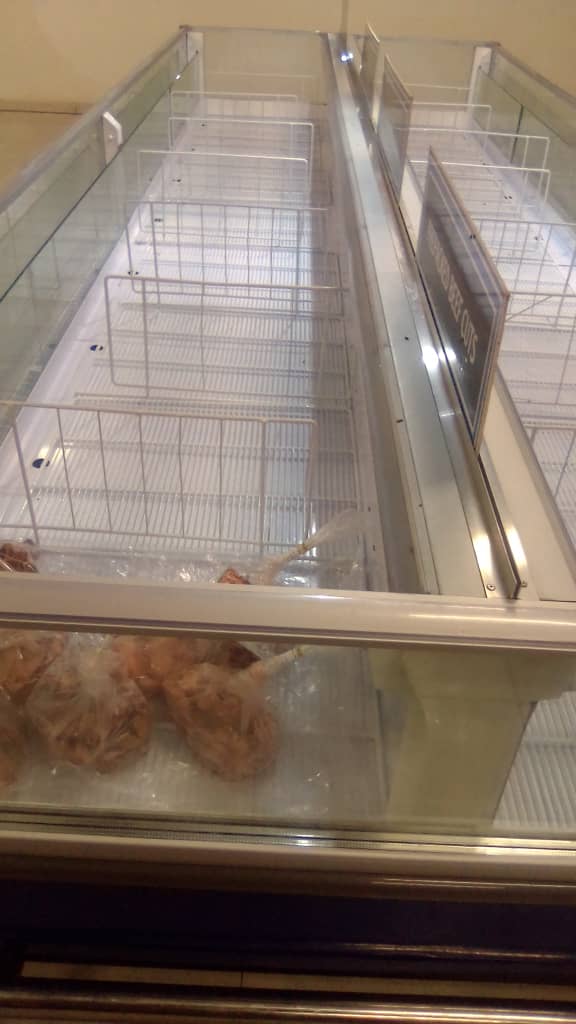


Empty shelves: The cold chain system in the display section of Texas Masvingo Butchery has collapsed and customers now wait to get their orders from cold rooms at the back (Pics by Walter Marwizi/ZimTracker).
Industrialists said the rolling power cuts, which have worsened this year, could cost the economy US$4 billion in lost production this year.
ZESA attributes the blackouts to a biting drought that has reduced output at its largest hydro plant as well as obsolete coal-fired generators that keep breaking down.
Even though the recent synchronisation of Hwange Unit 7-set to feed 300MW into the national grid-was successful, power utility ZESA Holdings’ subsidiary, Zimbabwe Electricity Transmission and Distribution Company (ZETDC), says it is only generating 951 megawatts (MW) of electricity against a national peak demand of 2 200MW.
ZETDC call centre supervisor Milton Zata said they were having challenges with the national grid.
“Unfortunately, we have national grid challenges, resulting in these long outages,” Zata tweeted.
The upgrades of the old hwange thermal units- commissioned between 1983 and 1987-were done at a cost of US$1,4 billion, with more than three quarters of the funding coming from China.



 ZimTracker