By Tatenda Chitagu
Top ZANU PF officials, Mangaliso Ndlovu and Obert Mpofu last weekend denounced the opposition as confused cockroaches, clowns and sellouts.
The remarks, made at Nyele Primary School in Plumtree during President Emmerson Mnangagwa’s star rally, have torched a storm with rights groups, civic society and the opposition saying they amounted to hate speech.
“Your Excellency, Matabeleland South province is well organised. We (Zanu PF) don’t have a single independent candidate. There are others who are confused. We wonder if they are a convention for confused cockroaches,” Ndlovu, the Zanu PF legislator for Bulilima East was quoted as saying in vernacular.
Zimbabwe’s biggest opposition party led by Nelson Chamisa is called the Citizen Coalition for Change. The party encountered difficulties in submitting the final lists of candidates in Bulawayo and was dogged by double candidates in some areas.
Ndlovu added; “What happened on nomination day showed us that these are people you would not trust to be in charge of a village, let alone an entire country. For 13 years, Your Excellency, from 2000 to 2013, we endured being under the opposition in Matabeleland South. Mat South was fully re-liberated in 2013. Since then, the level of development that we have seen under Zanu PF is massive.”
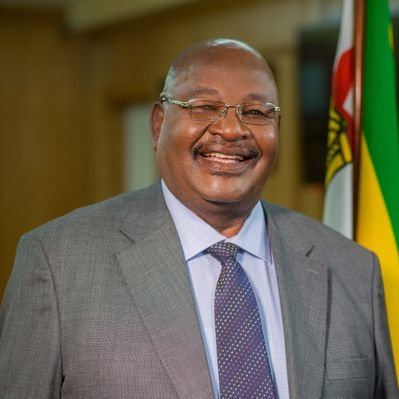
At the same function Mpofu (pictured above), who is the party’s secretary for administration, also made disparaging remarks about people who do not toe the Zanu PF line.
“There is no need to have an opposition in Zimbabwe. People fought for this country, a lot of blood was spilt. The people who make up the opposition today were sell-outs (during the war of liberation). Some are still selling out,” Mpofu said.
He also took a dig at former ZANU PF political commissar, Saviour Kasukuwere, who is also contesting the presidency as an independent candidate in the August 2023 elections, calling him a ‘criminal and a clown’.
“Someone who has a criminal record leaves Zimbabwe and goes to form a party in South Africa and return to Zimbabwe to try and rule this country. We will not allow that. Ubaba uMnangagwa ulozwelo; ukuthi wonke umuntu obengathi ulamadlabuzane obulema abuye azovuliparty la, ephambanisa abantu, (loosley translated to mean that Mnangagwa is not harsh enough to stop clowns that belittle Zimbabwe’s politics and sow confusion),” Mpofu said.
Do these statements constitute hate speech?
Firstly, it is important to unpack what hate speech means.
The UN Strategy and Plan of Action on Hate Speech refers to the working definition as “any kind of communication in speech, writing or behaviour that attacks or uses pejorative or discriminatory language with reference to a person or a group on the basis of who they are, in other words, based on their religion, ethnicity, nationality, race, colour, descent, gender or other identity factor.”
The United Nations also defines hate speech as ‘offensive discourse targeting a group or an individual based on inherent characteristics (such as race, religion or gender) and that may threaten social peace’.
It, however should be noted that there is no universal definition of hate speech under international human rights law to date as the concept is still under deliberation with regards to freedom of opinion and expression, nondiscrimination and equality.
Forms of hate speech:
Hate speech can include, but is not limited to scapegoating, stereotyping, stigmatization and the use of derogatory language. It is often employed in the promulgation of conspiracy theories, disinformation and denial and distortion of historical events.
Hate speech can be conveyed through any form of expression, including images, cartoons, memes, objects, gestures and symbols and can be spread offline or online.
What are the effects of hate speech?
Severe forms of hate speech constitute incitement to violence, hostility or discrimination, pejorative, demeaning communication or incitement to genocide or other violations of international law as espoused by Article 20 of the International Covenant on Civil and Political Rights.
In Zimbabwe, hate speech and other extremist narratives led to the attack and killing of opposition members, especially during the 2002 presidential elections and the 2008 run-off presidential elections.
In the late 80s, hate speech led to state-sponsored genocide on mainly Ndebele people in Matebeleland and Midlands provinces that saw the killing of an estimated 20 000 people in atrocities called Gukurahundi, (meaning the early rains that wipe off chaff).
“There was a direct correlation between the widespreadness and systematic nature of the attacks on civilians and the tacit encouragement, demonisation and dehumanisation of the victims of the Gukurahundi genocide,” noted Siphosami Malunga, who is a Director of Programmes at the Open Society-Africa, while delivering a 2020 Annual National Transitional Working Group Lecture on 8 December 2020.
Mugabe would go on to gain infamy for hate speech, often labelling gays and lesbians worse than dogs and pigs and describing then British Prime Minister Tony Blair as a gay gangster.
In Rwanda, divisive rhetoric led to the massacre of thousands of Tutsis by the Hutus tribe after a radio presenter described the former as ‘cockroaches that should be wiped out’.
In South Africa, hundreds of foreigners, Zimbabweans included, have been victims of xenophobic violence over the years as they have dubbed Amakwerekwere. They have been set alight in gory scenes, shot and beaten up by mobs.
So serious is hate speech that the UN General Assembly in 2021 adopted a resolution proclaiming 18 June of each year as the International Day for Countering Hate Speech.
UN Secretary General Antonio Guterres has a timeless quote on hate speech: “Hate speech is an alarm bell-the louder it rings the more the threat of genocide. It precedes and promotes violence”.
Our Verdict:
Yes, Mpofu and Ndlovu’s comments constitute hate speech. Their utterances perfectly fit into the confines of what constitutes hate speech.
Sources:
OHCHR’S International Convent on Civil and Political Rights:
UN Strategy and Plan of Action on Hate Speech:
UNESCO: https://www.unesco.org/en/countering-hate-speech/need-know




 ZimTracker