By Tatenda Chitagu
HARARE — It was a sweet victory for the Vision Group when, in January 2024, Tongaat Hulett creditors voted for the consortium as the new buyer of the troubled agri-processing business.
The Vision Consortium is led by a Zimbabwean businessman, a South African billionaire, a Pakistani sugar producer and an Egyptian-born entrepreneur.
There was every reason for the businessmen to celebrate, as they had faced several challenges in their bid to gain control of Tongaat Hulett, placed under business rescue in 2022.
Tongaat is one of southern Africa’s oldest company dating back to 1875. The agri-processing business includes integrated components of land management, property development, and agriculture.
“We had pursued this asset for six years,” admitted Rutenhero Moyo, the director of Vision Consortium in e-responses to this publication.
How the Tongaat race started:
The battle for control of Tongaat was spawned by events from 2019-2020 when the company was hit by accounting scandals and fraud by the previous executives, leading to a significant drop in its valuation and the suspension of its shares on the Johannesburg Stock Exchange following a forensic audit by PwC that uncovered the malpractices.
In 2022, Tongaat entered voluntary corporate rescue, burdened by debts and claims amounting to R13 billion (US$721,6 million).
This opened the floodgates for its takeover.
Initially, the Rudland family, through their Mauritius-registered company Magister Investments, emerged as the leading bidder for Tongaat. But Magister’s R4 billion offer was stopped due to concerns over alleged money laundering and regulatory breaches.
A key shareholder resolution paving the way for the deal was declared a “nullity” by the Takeover Regulation Panel (TRP), a unit of South Africa’s Department of Trade, Industry and Competition.
In mid-2023, the search began for a new buyer.
A plan by Tongaat administrators to sell the company to Kagera, a Tanzanian sugar producer, run by multi-millionaire brothers Seif Ali Seif and Nassor Seif which had submitted a R3.56-billion bid, also fell flat, after Kagera allegedly appeared to be struggling to raise funds.
The Industrial Development Corporation (IDC) was persuaded to conduct an internal inquiry, which led to a senior executive resigning, allegedly for approving a funding commitment for Kagera without the necessary authority.
The Zimbabwean government, on the other hand, also wanted control of the country’s largest sugar producer and Southern Africa’s leading agribusiness through the Sovereign Wealth fund, but failed to secure the deal after the creditors pulled the plug.
In the end, an alliance of various companies formed together under the name Vision Consortium assumed pole position.
The Vision Group comprises of Moyo as Director of Vision through his Mauritius-registered investment company, Remoggo; South African billionaire Robert Gumede through his company Guma Agri; Pakistanian Nauman Ahmed Khan through his company Almoiz; and Egyptian native Amre Youness of Terris Agripo.
However, Vision’s takeover of Tongaat in mid-2023 was held up by a required re-evaluation of Hulett’s liabilities relating to non-payment of a sugar levy, which meant that the debt was higher.
It was at the end of 2023 that Vision Consortium won control of Tongaat Hulett after it outwitted other competitors, using its strong financial muscle to buy out 12 banks that had a combined claim of R8 billion against the cash-strapped multinational sugar company.
Despite alleged shareholder unhappiness about what was seen as an unacceptably catastrophic impact on the value of their shares which led to a struggle to get them to approve the deal, the Consortium remained the leading entity to take over the ailing company and ultimately gained shareholder approval.
In January 2024 Vision took over 97.3% of Tongaat through a debt-to-asset transaction after creditors approved the deal, ending the drawn-out business rescue process.
But that was not the end of the Vision Consortium’s minefield in its bid for Tongaat.
In August 2024, an unsecured creditor, Powertrans filed legal case blocking the Vision deal.
Barely three months later, a rival bidder, Mozambican investment group RGS Holdings also filed an urgent application in the Durban High Court to interdict and set aside the sale of Tongaat’s assets to Vision Consortium, citing Vision’s alleged failure to meet its contractual obligation to acquire the full R8.5 billion in lender claims before any debt-for-equity conversion or asset sale could proceed.
It was in February this year that Vision Group won its legal battles after the High Court in South Africa dismissed a bid to block its acquisition of Tongaat Hulett.
On 16 April, the consortium got final clearance from Zimbabwe’s Competition and Tariff Commission. Vision also confirmed getting the credit facility from Standard Bank needed to buy the sugar producer, leading to delight that thousands of jobs had apparently been saved.
These regulatory hiccups and legal battles, according to Moyo, delayed the cash injection as Vision missed the initial deadline which was December 2023.
“Vision never breached its agreement with the lender group. The settlement was deferred by mutual agreement for several reasons, including regulatory approvals and legal contestations, which all failed but impacted timing and progress,” he said.
“Vision has been clear that it is a long-term investor, and this is backed up by the individual and collective investment history of the principals.”
The Bitter end:
But despite overcoming the court battles and the deal being effectively done, the Vision Consortium failed to deliver the funds as promised by the extended 30th April 2025 deadline.
The April 30, 2025 deadline was an extension of the March 30 deadline, which the consortium also missed.
No explanation was made.
This added to the takeover drama by Vision Group as a case of so near, yet so far.
“We are still waiting for the funds, which have, however, turned out to be elusive,” said a top Tongaat official, speaking off the record as she is not allowed to talk to the press due to company protocol.
Despite a spike in production, Tongaat-which owns two major sugar-producing subsidiaries in Zimbabwe, Triangle Limited and Hippo Valley Estates Limited, the latter of which is listed on the Zimbabwe Stock Exchange (ZSE)-in January announced a plan to retrench 1,000 workers by August this year due to increasing production costs.
This led to morale among workers hitting rock-bottom, as many had thought the coming in of Vision would mean thousands of jobs would be saved.
However, Moyo told The Newsday last week that the retrenchment process ‘predated Vision Group’s acquisition and stemmed from routine business reviews.’
“It did not have anything to do with the transaction at all, as we understand it. It was to do with certain parts of the business that needed to be transformed. For example, there were areas in the workshops and so forth in some of our supply chains that had actually been out-sourced.
“Yes, it was a rationalisation. But, when you look at the jobs that were created in those that actually got the outsourcing work, we believe that it may not have actually had the net impact that the image was portraying. But that is the take that we have.
“Do we ourselves actually have an intention to rationalise? In fact, our discussion with the regulators…was that there is opportunity for growth,” Moyo said.
What we know so far about the Vision consortium:
Following Vision’s successful takeover, this publication conducted an investigation into its members to get a better understanding of their previous track record in business and modus operandi. This has revealed worrying insights previously not highlighted to the public about these businessmen.
New details have emerged of some of the consortium’s previous questionable business associations.
Guma Agri and Food:
The most prominent member of the consortium is Guma Agri and Food, as it forms part of the Guma Group of Companies that has as its chairman, the high-profile South African entrepreneur Gumede, who has acted as the Vision Consortium’s public spokesman and primary spokesperson for the bid.

Robert Gumede (picture sourced online)
Guma Agri and Food Security Limited is a private company limited by shares incorporated in Mauritius, with company file number C192979, having its registered office address at B45 Twenty Foot Road, 5th Floor La Croisette, Grand Baie, Mauritius.
Fifty-five-year-old Gumede is the founder of the Guma Group, a leading black-owned investment company with businesses spanning Information Technology, mining, tourism, infrastructure development, hospitality, and energy in several African countries. He is also one of South Africa’s most recognizable philanthropists. His charity, the Keni Foundation, has given away millions of dollars in scholarships to poor South African students.
But despite his success and philanthropy, he remains a controversial figure, not least as his company was once at the center of a major corruption investigation in South Africa amid a number of other fraud allegations against him, charges which he has vehemently denied.
Al-Moiz Industries
AL-Moiz Industries is part of Pakistan’s Al-Moiz Group and was incorporated in Pakistan on May 5, 2005. It is an unlisted public company engaged in the seasonal manufacturing of sugar and allied products from sugar beet and sugarcane. It operates five sugar mills that produce 650,000 tonnes of refined sugar every year. The Almoiz group is the largest Pepsi franchise in Pakistan. Its founder, Nauman Ahmed Khan, previously worked for Pepsi.

Nauman Ahmed Khan (picture sourced online)
Al-Moiz has been at the center of one of the worst sugar corruption scandals in Pakistan’s history, with allegations that it and other leading Pakistani sugar companies allegedly under-reported sales, manipulated the market, and fabricated production costs to get subsidies. The company denied the charges.
Concern over the scandal swirling around its business practices and a belief that Al-Moiz would not be able to deliver on the promises it had made was so great that it resulted in one of Australia’s biggest sugar mills, the Isis Central Sugar Mill, in 2020 pulling out of an agreement for Al-Moiz to buy a controlling stake in the business.
Remoggo
Remoggo is invested in retail, agribusiness, logistics, and facilities management services in Zimbabwe and seven other African countries. Remoggo director, Moyo has been on the Hippo Valley board since 2020, a subsidiary of Tongaat.
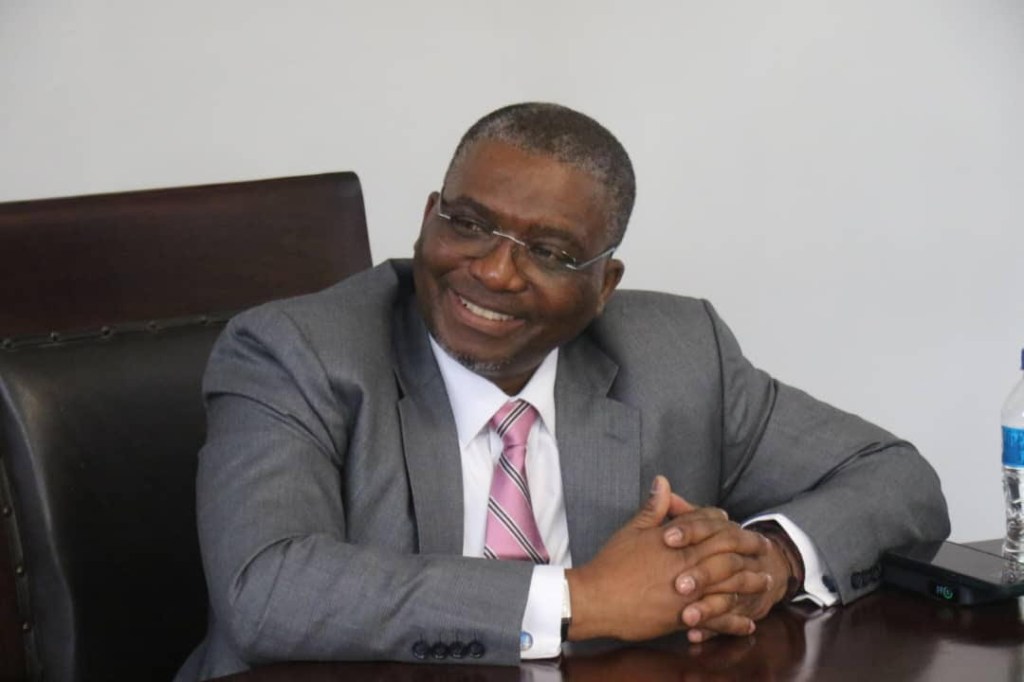
Rutenhero Moyo (picture sourced online)
Rivals claim this posed a potential conflict of interest and could have given him access to insider information.
Moyo, however, denied that he had an unfair advantage in the Tongaat sale because he sat on the board of Hippo Valley.
“Governance safeguards were managed very carefully by all parties, including the necessary disclosures, and I even took leave of absence to ensure that I would not have any unfair advantage. I was invited to the board of Hippo Valley by Tongaat itself after our initial bid in 2019 was not successful—they were fully aware of my interests but believed that I had something to contribute to the board of this listed entity,” he said.
Moyo is also chairman of Zimbabwe Stock Exchange (ZSE)-listed company National Tyre Services and sits on the boards of FBC Holdings and OK Zimbabwe. He has had past roles at South Africa’s Shanduka Group, leading its interests in Coca-Cola SA and McDonald’s SA. In 2023, it was reported that he had invested US$420,000 into Jamboo, a tech start-up planning to launch digital banking services to the African Diaspora.
Moyo will hold 56% of the restructured business, making him the largest shareholder. He is alleged to have held talks with the controversial Zimbabwean Sovereign Wealth Fund, renamed Mutapa Investment Fund, falling under President Emmerson Mnangagwa’s son Kudakwashe, who is the deputy finance minister.
Moyo admitted that the Mutapa Investment Fund will soon be buying shareholding in Vision Group.
“Negotiations are very advanced, and the necessary disclosures will be made at the appropriate time. We welcome their (Mutapa Investment Fund) interest in the same way as IGEPE in Mozambique and the IDC in South Africa,” he said.
A top economist said this development is ‘especially concerning’ as the Zimbabwean Sovereign Wealth Fund was an early bidder for Tongaat after the deal with the Rudlands collapsed. The Fund had wanted only the Zimbabwean assets, but this attempt was rebuffed as the business rescue practitioners wanted at that stage to keep the company intact.
“Now rumours are growing that Vision would want the company to be broken up. Any involvement of the Mutapa Investment Fund in Moyo’s backing would be a matter of concern. This raises questions about whether Moyo had been his own man in the race for Tongaat, or whether he was fronting for Mutapa, given that the government had failed to acquire Tongaat,” said a top economist, on condition of anonymity.
Terris Agripro
But the most surprising and perhaps shocking part of the investigation was what was found about arguably the least well-known and most private of the Vision Consortium members: Terris Agripro. Little is known about the man behind it, Amre Youness, who keeps himself as low-profile as possible. Indeed, despite his wealth and power, he has few recent photographs.
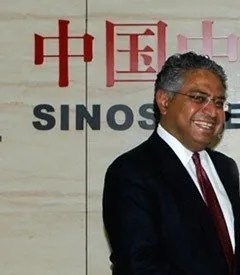
Amre Youness (picture sourced online)
But as we started pulling on the thread of this largely unexamined part of the Tongaat Hulett takeover team, what was discovered was a man who has been operating around Africa and other parts of the world, engaged in deal after deal that is never far from controversy.
Was Youness therefore the person really pulling the strings on this deal from behind?
Indeed, his importance in the deal gives every indication of being key, as in its initial stages, the Consortium was called the “Terris Consortium,” a brand name used across his corporate portfolio, thereby indicating his fundamental role in being a lead driver in the whole endeavour.
Born on February 3, 1962, in Alexandria, Egypt, Youness is an Egyptian native who now also holds a UAE passport and a UK passport and had US citizenship up to June 2017.
He married into one of the most famous names in America, the Heinz family, after meeting his wife, Caroline Heinz Youness, at Georgetown University in Washington DC, when they were both members of the university’s Edmund A. Walsh School of Foreign Service.
The Heinz family is one of the wealthiest in the US, although it appears Caroline is not part of the wealthiest parts of it. She styles herself as a philanthropist, with particular interest in African development initiatives.
Caroline and Youness have three adult children—Lena (29 years old), Osman (33 years old), and Noor (34 years old)—and travel between their homes in Cumberland Terrace in London and Pasadena in California.
The couple also have their own game reserve in South Africa called Lalibela, which they do not like other people to access. An attempt by a local safari lodge to allow their vehicles to cross part of the land that makes up Lalibela Farm ended up in court, so determined was Youness to protect his privacy and exclusivity.
Association with Billionaire Oligarch Patokh Chodiev
Youness first rose to prominence due to his association with Patokh Chodiev, the Belgian-Uzbek oligarch who made his fortune as one of the ‘trio’ of oligarchs that dominate the Eurasian Natural Resources Corporation (ENRC), which controls most of Kazakhstan’s mineral wealth.
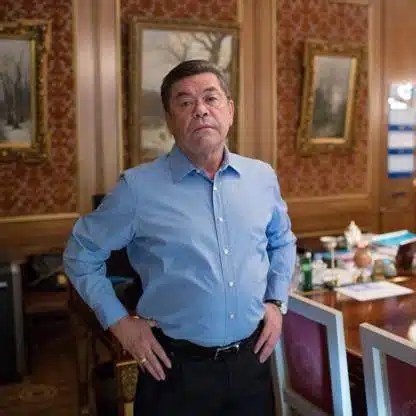
Patokh Chodiev (picture sourced online)
After being brought in as an advisor on the company’s 2007 IPO on the London Stock Exchange, he was rewarded by being appointed CEO of International Mineral Resources (IMR), the trio’s investment vehicle that shared the same building in London as Chodiev’s private office. Among the entities directly owned by IMR was IMR Management Services, which Youness has previously said he was a consultant for when seeking to allegedly publicly downplay his involvement in IMR by saying he was merely a consultant to the company and not CEO.
It is alleged that Youness was unable to join ENRC directly due to his apparent involvement in a US insider trading scandal with former business partner and fellow Egyptian Ahmed El Alfi in the early 2000s.
The Trio and ENRC became the center of a 12-year investigation by the Serious Fraud Office (SFO) in the UK for suspected bribery and fraud in Africa and Kazakhstan, which the mining company denied. The case was finally dropped, with the SFO citing lack of admissible evidence.
Although the SFO closed the case due to the issues with how the evidence was collected and received, its contents and findings remained clear and were publicized. Multiple examples of ENRC’s alleged involvement in corruption in Africa were unravelled, namely in its involvement in various transactions with Dan Gertler in relation to mining operations in the DRC, such as around the acquisition of Gertler’s holding company Camrose, as well as alleged payments to Zambian officials around the purchase of Chambishi, a copper smelter in the country.
The case therefore left lasting reputational damage to ENRC, which was further damaged by a Financial Times investigation into the deaths of three South Africans.
Youness managed to escape association with ENRC and stated he had no knowledge of unsavoury practices, maintaining he only worked as a corporate advisor to International Mineral Resources BV in a consulting capacity and saying through his lawyer that “Mr. Youness had zero involvement with any of these allegations.”
However, the main protagonist in ENRC’s alleged African bribery scheme, Victor Hanna, was interviewed by UK persecutors in a bribery case to win businesses in Africa. Indeed, prior to his appointment as CEO of ENRC Africa in October 2011, Hanna had been seconded to ENRC from IMR, which was under Youness’s command.
Samancor, of which Youness was chairman, has been involved in numerous court cases, including those related to Broad-Based Black Economic Empowerment (BEE) deals. One notable case involves a whistle-blower, former Samancor director Miodrag Kon, who alleges significant financial losses and fraudulent activities, including a transfer pricing scheme and undisclosed fees. Another case, Samancor Chrome Ltd v VDH Holdings (Pty) Ltd and Others, deals with the company’s consultation obligations regarding public participation in mining projects. There’s also a labor court case, Samancor Chrome Ltd (Western Chrome Mines) v Willemse, concerning the dismissal of an employee. Samancor denied any wrongdoing.
The most shocking is the case brought by the Association of Mining and Construction Union (Amcu) that claims the leadership of Samancor defrauded the workers supposedly protected under its BEE scheme to the tune of $500 million. Samancor denied the charges,
Shaftsinkers, of which he was non-executive chairman and a director, ended up being delisted from the London Stock Exchange amid lawsuits over unpaid bills and ultimately insolvency. Among the claims in the lawsuits were bribery and fraud. Shaftsinkers denied the charges.
Separate from his IMR/ENRC work, Youness also pursued his own telecoms business, Afrimax, focused on the African continent:
Afrimax was a telecoms company that Youness had a large stake in that gained the right to utilize the Vodafone brand in Zambia, Ghana, Malawi, Uganda, and Cameroon. Despite having raised more than $170 million of investment, it collapsed with questions asked about how the company could have gone wrong so quickly.
And now his interest in the African continent continues via Terris Fund SPV, Terris Mining Ltd, and Terris Agripro itself, all of which are registered in opaque offshore jurisdictions, namely in the Bahamas, Cayman Islands, and Mauritius. Through these structures, Youness has interests in South African diamond and chrome sectors, as well in Tongaat Hulett.
Terris AgriPro was registered in Mauritius on May 6, 2020, with the registered office address 5th Floor, Nexsky Building, Ebène, Cybercity, 72201. It is registered at an address that is home to Trident Trust Co (Mauritius) Ltd. Trident Trust is also named as its Management Company and is the Secretary. This raises another red flag, as Trident Trust has been extensively named in the Pandora Papers, an investigation into the shadowy offshore financial deals that questioned the unscrupulous secret economy by wealthy and powerful business people and politicians, unraveled by the International Consortium of Investigative Journalists (ICIJ).
But Moyo brushed off such alleged tainted past of members of the Vision Consortium, saying they are not Politically Exposed Persons (PEPs).
“All members of Vision have several business interests in many jurisdictions, which means that they interact with many regulators in their normal course of business, but none of them qualify as ‘PEPs,’” he said.
For now, the business community in Zimbabwe and the southern African region and beyond have waited with bated breath how Tongaat will proceed with the new owners.
The Zimbabwe Investment Development Agency (ZIDA) and the Tongaat spokesperson had not responded to questions sent to them by the time of publishing.
*Banner Image: Rutenhero Moyo (picture sourced online)
Sourcing for this story was supported by an East African charity working on labor and agriculture issues.



 ZimTracker